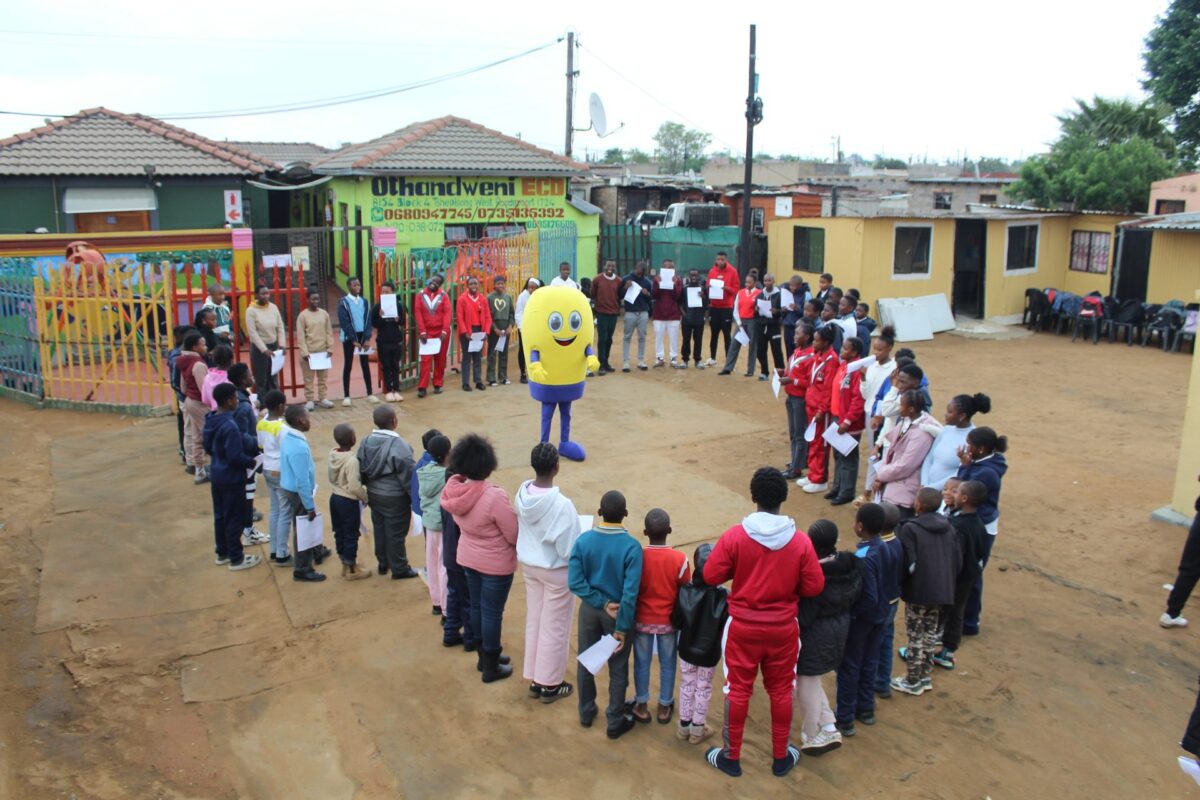
This October, Lights On After School shines a spotlight on the important role after-school programmes are playing in helping South African learners stay engaged, overcome barriers to learning and reach their full potential.
Every day, across South Africa, after-school programmes are helping to bridge the gaps in education, giving learners of all ages access to academic support, mentorship, safe spaces and opportunities to develop beyond the classroom. Through the annual Lights On After School (LOAS) campaign, now in its seventh year, The Learning Trust, in partnership with YearBeyond, is celebrating the organisations, practitioners and communities making this work possible.
Celebrated internationally throughout October, Lights On After School highlights the value of programmes that support children and young people beyond the school day. South Africa’s 2026 theme, “Switched On! Ready to Learn. Ready to Play. Ready to Grow”, reflects the breadth of opportunities that occurs beyond the school bell.
“For many learners, what happens after the school bell rings can be just as important as what happens during the school day. This is a crucial time for learners to make use of a safe space and get the additional academic support and mentorship they need to stay engaged and on track,” says Charlene Petersen Voss, Executive Director at The Learning Trust.
After-school programmes also have the potential to address youth unemployment, another pressing challenge facing South Africa.
“After-school programmes show us what is possible when we stop treating youth unemployment and education challenges as separate. They give young people meaningful work experience while creating more opportunities for children and learners to learn, play, discover their interests and pursue their passions beyond the school day. At YearBeyond, we are proud to see these creating pathways into the education sector, with around 30% of young people who progress from our programme going on to remain in education. We are seeing a new generation of teachers and education professionals emerging from these experiences. That is the real power of after-school programmes,” explains Wayde Groep, Communication and Advocacy Manager at YearBeyond.
The urgency is underscored by a sobering reality. According to Zero Dropout’s 2025 report, four in 10 learners who enter Grade 1 do not complete Grade 12, and of the approximately 1.2 million children who enter Grade 1 each year, only around 650,000 make it through to matric. The attrition accelerates after Grade 9, making adolescence a particularly vulnerable point in the schooling journey. After-school programmes play a crucial role here in intervening early with academic support, and mentorship so young people stay engaged, and then return the next day, and ultimately continue through to matric.
The cost of falling behind
The consequences of learners falling behind carries a significant economic cost. Research published by the Learning Trust in its After School Programmes in South Africa: The Investment Case report found that an estimated 1.18 million learners repeated a grade in public schools in 2018, at a cost of at least R20 billion, equivalent to around 8% of the national basic education budget.
The research also found that, in quintile 1–3 schools, the education system was effectively spending around R614,000 for every matric pass and more than R2 million for every Bachelor’s pass.
‘We know that after-school programmes cannot replace the formal education system, nor are they intended to. However, if South Africa wants to get a better return on the substantial investment already being made in formal education, then the answer is not simply to spend more, but rather to complement and strengthen the support around learners, providing homework support, tutoring, literacy interventions, mentoring and psychosocial support that an already stretched school system may not always be able to provide,” adds Voss.
The need is particularly acute when it comes to school dropouts too. Zero Dropout’s 2025 report highlights that leaving school is rarely the result of a single decision but usually as a cumulative combination of financial pressure, bullying, family instability, learning difficulties, transport challenges and other stressors before eventually disengaging from school. That makes early and sustained intervention critical.
“In vulnerable communities already grappling with poverty, violence and gang activity, children face another set of challenges once the school bell goes. There is often no quiet place for them to do homework, no electricity or connectivity, and no adults at home to provide academic support. An after-school programme can provide a safe, structured environment where a young person is learning, supported by mentors and connected to peers and role models who can help them see a future beyond the circumstances around them,” adds Voss.
One example cited in the report is the Isibindi Ezikoleni model, run by the National Association of Child Care Workers, which embeds trained child and youth care workers in schools. Programme schools have consistently recorded dropout rates below 1% and absenteeism among enrolled learners who had previously missed more than three days improved by 51% in 2024/25. Seven learners who had already left school were successfully reintegrated in KwaZulu-Natal. The example demonstrates the potential of wraparound support to intervene before disengagement becomes permanent.
Another example comes from the Learning Trust’s earlier research into programmes such as IkamvaYouth. Over the 15 years assessed, the programme recorded an average 85% matric pass rate, with 43% achieving Bachelor’s passes. The research estimated that adding the after school support reduced the investment required per matric pass from approximately R614,000 to R391,000, a 36% reduction. The estimated investment required per Bachelor’s pass also fell from around R2 million to R771,000.
“We see inspiring work happening across the after-school sector, with dedicated organisations, practitioners and young people making a meaningful difference in the lives of learners every day. By celebrating this work and bringing together government, business, philanthropy and communities, we have an opportunity to build on what is already working, support more programmes to grow and reach more young people,” says Voss.
A shift in how after-school is understood and funded involves formally recognising after-school programmes as part of the wider education ecosystem and creating stronger links between the formal school system and organisations working beyond the school day. For business, it means moving beyond once-off philanthropy towards strategic investment in credible after-school organisations as an investment in South Africa’s human capital and future workforce.